How to Track Invisible Traffic: Revealing the Hidden Visitors Your Analytics Miss
Category: Content Marketing
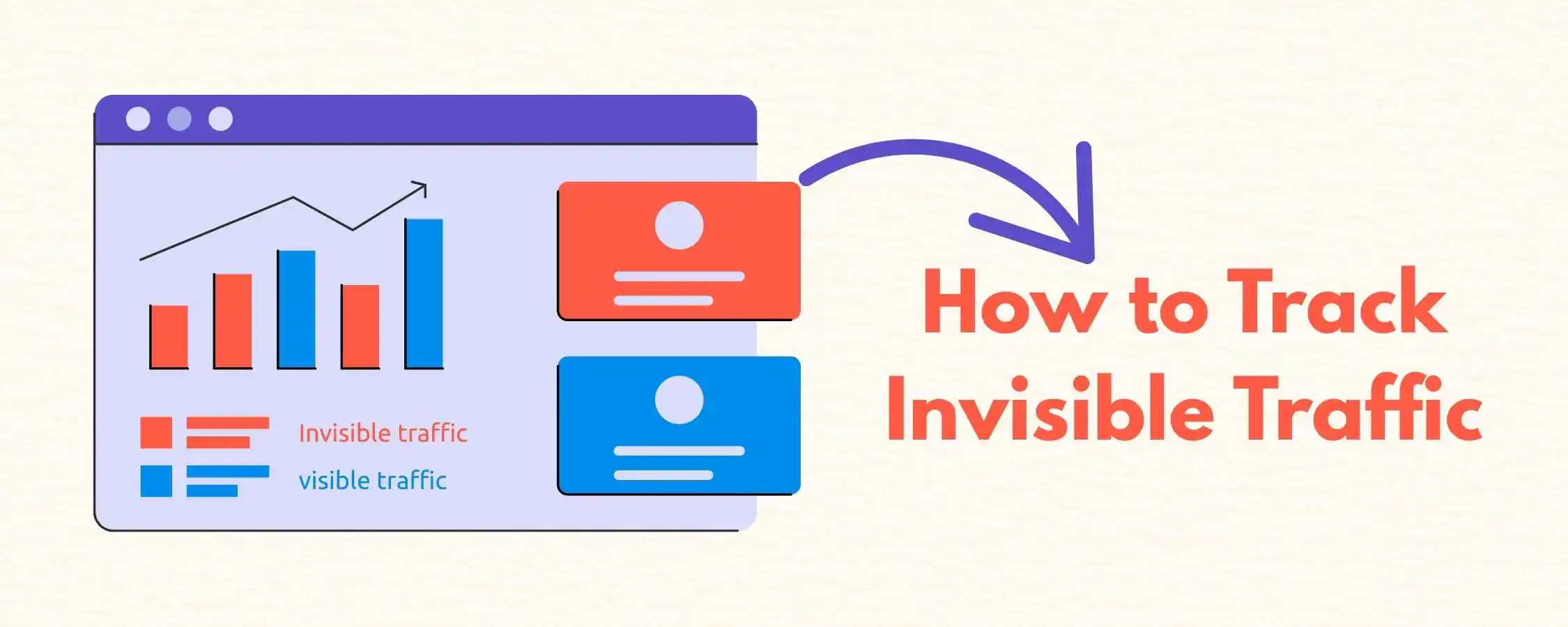
Track Invisible Traffic are now a daily reality for marketers. As privacy rules evolve, cookies fade, GA4 changes how we measure and AI adds new options, it’s getting harder to prove which content actually moves revenue. Yet the stakes are high: without reliable attribution, budget decisions are guesswork and ROI suffers.
This guide explains content attribution simply, then goes deep. You’ll learn the seven biggest attribution issues in 2025, practical fixes and a step-by-step framework you can use to build a future-proof system. We’ll also cover GA4 quirks, AI-driven attribution and how to connect offline and online data.
In this guide, we’ll unpack the biggest attribution challenges - and proven ways to solve them.
Tip: Save this article and share it with your analytics, content and RevOps teams.
Introduction
You open Google Analytics and see 40% of visits labeled "Direct / none." But you know those visitors didn’t all type your URL by hand. So where did they come from?
Welcome to the world of invisible traffic - the "ghost" visitors slipping through the cracks of modern analytics. They arrive without referral tags, invisible to your attribution reports, unseen by your marketing ROI dashboards.
Thanks to dark social sharing, privacy-first browsers, cookie loss and evolving tracking restrictions, invisible traffic has grown rapidly. Analysts now estimate that 20–50% of total site visits fall into this untraceable bucket.
This guide will reveal:
- What invisible or "dark" traffic really is
- Why it happens and how it affects your business
- Proven methods to uncover hidden visitors using GA4, AI models and first-party data tools
Let’s bring those unseen visitors into the light.
What Is Invisible (or Dark) Traffic?
Invisible traffic - also known as dark traffic or hidden analytics traffic - refers to website visits where the source is unknown. In Google Analytics 4 (GA4), these usually appear as "Direct / none."
That doesn’t mean people manually typed your website address. Instead, it often means the referral data (the digital "return address") got lost somewhere between click and visit.
Example
A user shares your blog link in a private Slack channel. Their colleague clicks it. Slack doesn’t send referral information - so GA4 can’t tell that visit came from Slack. It gets dumped into your "Direct" bucket.
According to a Parse.ly study, around 21% of traffic globally is untraceable due to these hidden sources.
Common examples of invisible visitors
- Links shared in WhatsApp DMs, Slack or email
- Visitors from privacy-centric browsers blocking referrers
- Redirects and shortened URLs that remove UTM parameters
Why Does Invisible Traffic Happen?
Invisible traffic occurs when tracking data - referrers, cookies, UTM tags - disappears or is blocked. Here’s why:
1. Dark Social Sharing
Private shares on WhatsApp, Facebook Messenger and Slack send zero referral data. When a user clicks, analytics tools see only a direct visit.
Tip: Treat dark social as a hidden distribution channel. People are recommending your content - you just can’t see the path.
2. Privacy-First Browsers
Browsers like Safari, Firefox and Brave limit referrer details and restrict third-party cookies by default. As privacy rules tighten, tracking gaps widen.
3. Ad Blockers Removing Referrers
Many ad blockers strip tracking scripts or block analytics requests completely, hiding large chunks of sessions.
4. HTTPS → HTTP Referral Drops
If a user clicks from a secure site (https://) to a non-secure one (http://), referrer data gets lost in transit.
5. Email Clients Stripping UTM Tags
Some email and corporate security systems cut tracking tags, replacing them with internal redirects or none at all.
6. GA4 and Cookie Restrictions
GA4 relies on first-party identifiers. If users reject cookies or consent mode is disabled, sessions can appear anonymous and unlinked.
The Business Impact of Invisible Traffic
You can’t optimize what you can’t measure. Invisible traffic disrupts every part of your marketing strategy.
- Lost attribution accuracy: You can’t see which channels drive conversions.
- Under-valued content or channels: Social or email performance looks poor.
- Skewed ROI reports: Campaigns receiving hidden traffic appear unprofitable.
- Missed remarketing opportunities: Anonymous sessions prevent follow-ups or retargeting.
A 30% traffic gap can mislead your marketing team into cutting high-performing campaigns just because the visits looked "direct."
How to Track Invisible Traffic (7 Proven Methods)
Here’s how to uncover those lost visitors step-by-step.
1. Use UTM Tagging Everywhere
Add UTM parameters (utm_source, utm_medium, utm_campaign) on every outbound link: emails, PDFs, LinkedIn posts, even QR codes.
Use tools like Google’s Campaign URL Builder or HubSpot Tracking URL Builder.
Pro Tip: Avoid long, obvious UTM strings in guest content - use a branded shortener.
2. Implement First-Party Server-Side Tracking
Move away from browser-based scripts. Use GA4 server-side tagging or tools like Piwik PRO to collect reliable first-party data that persists beyond cookies.
3. Adopt Tools That Unmask Anonymous Visitors
Platforms like Leadfeeder, Clearbit Reveal and Albacross can identify visiting companies or user segments via IP intelligence and enriched firmographics.
4. Leverage AI Attribution Modeling
AI-driven tools like Google Analytics 4’s Attribution AI, Segment or Dreamdata analyze behavior patterns to predict probable traffic sources - closing gaps left by missing referrers.
5. Build Referral Mapping Rules in GA4
Within GA4, use the Data Streams → Configure Domains option to identify known referral channels, map internal redirects and reduce false "direct" hits.
6. Use Branded Link Shorteners with Analytics
Bitly and Rebrandly let you embed tracking data and measure clicks happening off your website (for example, in PDFs and offline QR codes).
7. Integrate CRM or CDP for Identity Resolution
Connect GA4 to your CRM (like HubSpot or Salesforce) or Customer Data Platform to stitch user identities across sessions, even when cookies fail.
| Method | Tools / Resources | Best Use Case |
|---|---|---|
| UTM Tagging | GA URL Builder, HubSpot | Easy tracking fix for campaigns |
| Server-Side Tagging | GTM SS, Piwik PRO | Privacy-safe analytics |
| Visitor ID Tools | Leadfeeder, Clearbit | B2B analytics |
| AI Attribution | Segment, Amplitude | Complex funnel mapping |
| Link Shorteners | Bitly, Rebrandly | Social + offline shares |
GA4 and the Future of Invisible Traffic Tracking
GA4’s event-based tracking and AI-driven modeling improve visibility - but they can’t perform miracles.
What GA4 helps with
- Event-level analysis instead of session-fragmented data
- Cross-device tracking through Google Signals
- Predictive audiences identifying likely converters
What GA4 still misses
- Unconsented visits (privacy loss)
- Third-party app shares without parameters
- Referrer removal by browser engines
Solution: Combine GA4 data with UTM hygiene, consent mode and server-side tagging. You can shrink your "direct" bucket drastically just by consistent campaign tagging.
AI-Powered Solutions for Tracking Hidden Traffic
Modern AI platforms can infer invisibility - predicting traffic source by user behavior, time and referral probabilities.
Examples
- Amplitude uses machine learning to combine identity graphs with behavioral cohorts.
- Segment creates unified profiles even when session IDs are missing.
- Piwik PRO offers privacy-friendly AI models predicting untagged referrers.
| Tool | Core Focus | Why It Matters |
|---|---|---|
| Amplitude | Behavioral analytics | Detects unseen visitor paths |
| Segment | Data unification | Fills attribution gaps |
| Piwik PRO | Privacy AI | Keeps compliance intact |
AI attribution turns fragmented data into insight, without violating privacy standards.
How to Reduce Invisible Traffic Long-Term
Prevention is stronger than retroactive correction. Build future-proof visibility by:
- Data Governance Policy: Define how UTMs, cookies and consent are maintained.
- Education: Train marketing teams to tag every promotion - yes, even that PDF on your CEO’s LinkedIn post.
- First-Party Data Collection: Use login systems, preference centers and email gated content.
- Consistent Campaign Taxonomy: A clear naming system avoids duplicate "Direct / none" chaos.
Conclusion
Invisible traffic won’t vanish overnight, but your ability to detect, interpret and act on it will define your data strategy’s future. By embracing first-party data, AI attribution and GA4 optimization, you can transform "dark" insights into the brightest guide for smarter marketing.
Frequently Asked Questions About Track Invisible Traffic (2025)
Invisible traffic includes sessions where GA4 cannot determine the source or medium and they appear as “Direct / none.” It happens when referral data or UTM tags are missing.
Use GA4 exploration reports, apply custom segments for direct traffic and cross-analyze with CRM or IP intelligence tools like Leadfeeder to detect patterns.
Not directly. But it hides attribution sources, making your content undervalued and reducing visibility into what drives organic growth.
Clearbit, Leadfeeder and Albacross use firmographic and IP-based enrichment to identify companies visiting your site.
GA4 uses machine learning and modeled conversions to fill gaps, but untagged or cookie-less visits may still default to direct traffic.
No, but AI attribution models can approximate missing sources and significantly improve accuracy without breaching privacy laws.
Traffic from private channels like WhatsApp, Messenger or email shares that passes no referral data to analytics platforms.
Shift to first-party tracking, server-side tagging and consistent UTM practices across all digital assets.