Programmatic Ad Buying Explained: The Future of Digital Advertising (2025 Guide)
October 10, 2025 Category: Paid Advertising
What Is Programmatic Ad Buying?
Programmatic ad buying is the automated process of purchasing digital advertising space using software and artificial intelligence (AI). Instead of manual negotiations with publishers, brands use platforms and algorithms to buy ads in real-time, targeting the right audience, at the right moment, on the right channel.
Think of it as the stock market for digital ads: bids are placed automatically, and impressions are bought or sold in milliseconds.
Programmatic vs. Manual Buying
| Aspect | Traditional Media Buying | Programmatic Ad Buying |
|---|---|---|
| Process | Manual negotiation | Automated via AI algorithms |
| Speed | Days or weeks | Milliseconds |
| Targeting | Broad demographic | Behavioral, contextual, real-time |
| Optimization | Manual reporting | Continuous, AI-driven |
| Scalability | Limited | Global, across multiple platforms |
💡 Example:
In traditional media, a brand might negotiate with a website owner to buy banner space for a week. In programmatic buying, the same brand uses a Demand-Side Platform (DSP) to bid for that space automatically every time a potential customer visits.
How Programmatic Ad Buying Works
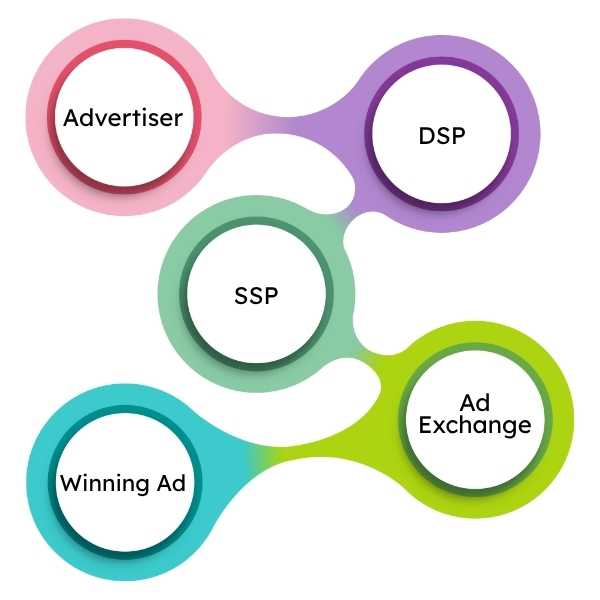
Here’s how it happens behind the scenes-automatically and in real-time:
- Advertiser sets goals in a DSP (e.g., target demographics, interests, budget).
- DSP sends bids to an ad exchange when a user visits a site.
- SSP (Supply-Side Platform) represents the publisher and offers ad inventory.
- Ad Exchange conducts Real-Time Bidding (RTB) to determine the winning ad.
- Winning ad displays instantly-within 100 milliseconds.
Key Components of the Programmatic Ecosystem
-
Demand-Side Platform (DSP)
A DSP (like The Trade Desk, Google Display & Video 360, or Amazon DSP) allows advertisers to automate buying, optimize bids, and target specific users across multiple networks.
-
Supply-Side Platform (SSP)
SSPs (like Magnite, PubMatic, and OpenX) help publishers maximize revenue by managing and selling their ad inventory efficiently.
-
Data Management Platform (DMP)
DMPs like Lotame and Oracle BlueKai collect and analyze audience data, enabling hyper-targeted campaigns.
-
Ad Exchanges
Ad exchanges (such as Xandr and Google AdX) act as the auction floor connecting DSPs and SSPs.
-
Publishers & Advertisers
Publishers provide ad spaces; advertisers pay to fill them with personalized, data-driven ads.
Benefits of Programmatic Ad Buying
1. Efficiency & Automation
Automating ad purchases removes human bottlenecks, saving time and reducing costs.
2. Precision Targeting
Advertisers can target based on:
- Demographics (age, gender, location)
- Behavior (sites visited, interests)
- Context (article topics or video genres)
- Device type and time of day
3. Real-Time Optimization
AI systems adjust bids and placements based on performance data.
4. Better ROI & Scalability
From one dashboard, advertisers can manage multi-channel campaigns-across display, video, CTV (Connected TV), and mobile.
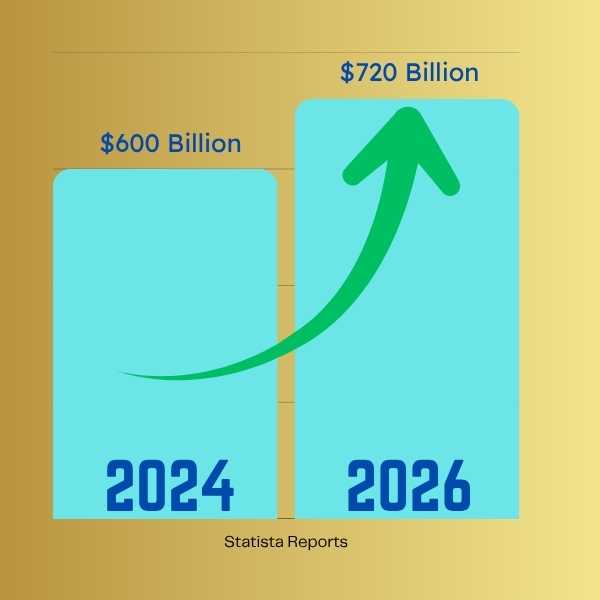
🧩 Statista reports that global programmatic ad spend surpassed $600 billion in 2024, projected to reach $720 billion by 2026.
Types of Programmatic Advertising
- Real-Time Bidding (RTB) – Open auctions for ad impressions.
- Programmatic Direct – Fixed-price, reserved deals with publishers.
- Private Marketplaces (PMPs) – Exclusive auctions with selected advertisers.
- Preferred Deals – Negotiated one-to-one before open bidding begins.
Examples of Programmatic Advertising in Action
Example 1: eCommerce Campaign
A fashion retailer uses Google DV360 to retarget users who viewed products but didn’t purchase. Ads follow them across YouTube, Instagram, and news sites, dynamically adjusting based on interests.
Example 2: CTV/OTT Campaign
A streaming platform uses programmatic ads on Roku and Hulu to reach viewers watching lifestyle shows, targeting specific demographics and locations.
Example 3: B2B Lead Generation
A SaaS company leverages LinkedIn programmatic placements to target decision-makers, improving lead quality and conversion rates.
Programmatic Ad Buying vs. Traditional Media Buying
| Feature | Traditional Buying | Programmatic Buying |
|---|---|---|
| Speed | Manual negotiation | Automated in milliseconds |
| Data Use | Limited | Rich, behavioral targeting |
| Optimization | After campaign ends | Real-time adjustments |
| Measurement | Manual reports | Live dashboards |
| Transparency | Opaque | Full visibility via AI tools |
Challenges & Limitations
-
Ad Fraud: Fake clicks and impressions can inflate results.
➡ Solution: Use fraud detection tools like IAS and DoubleVerify.
-
Brand Safety: Ads might appear on unsuitable content.
➡ Solution: Whitelisting and contextual targeting.
-
Data Privacy: GDPR and CCPA limit cookie-based targeting.
➡ Solution: Embrace first-party data and AI-driven contextual ads.
-
Complexity: The ad tech ecosystem can be overwhelming.
➡ Solution: Work with certified programmatic partners.
The Future of Programmatic Advertising (2025 and Beyond)
The next evolution of programmatic ad buying is here - smarter, privacy-first, and omnichannel.
1. AI & Machine Learning Integration
AI predicts user behavior, automates optimization, and enhances targeting precision.
2. Cookieless Targeting
Brands are shifting to first-party data and contextual intelligence for compliant targeting.
3. Connected TV (CTV) Growth
CTV and OTT platforms now dominate programmatic ad budgets, reaching audiences beyond traditional TV.
4. Audio and In-Game Advertising
Programmatic audio (Spotify, Pandora) and in-game placements are fast-growing frontiers.
📊 According to eMarketer, 91% of all digital display ads will be programmatically traded by 2025.
Conclusion
Programmatic ad buying is reshaping how digital advertising works, making it faster, smarter, and more measurable. With AI-driven automation, cross-channel precision, and privacy-safe targeting, it’s the future of advertising in 2025 and beyond.
💡 If you’re ready to modernize your digital strategy, explore how expert-led programmatic campaigns and AI-based optimization can scale your business faster
Frequently Asked Questions About Programmatic Ad Buying (2025)
Programmatic ad buying is the automated process of purchasing digital ad inventory using AI and real-time bidding (RTB). It eliminates manual negotiations by using algorithms to deliver the right ad to the right person at the right time across multiple platforms.
Programmatic ad buying works through a digital auction system called Real-Time Bidding (RTB). Advertisers use a Demand-Side Platform (DSP) to bid on ad impressions as users visit websites or apps. The winning ad is shown instantly, usually within milliseconds.
Several tools support programmatic video ad buying, including Google Display & Video 360 (DV360), The Trade Desk, Amazon DSP, and Xandr. These platforms allow marketers to manage, optimize, and scale video campaigns across YouTube, CTV, and OTT platforms.
The key benefits include:
- Automation: Faster and more efficient media buying.
- Precision Targeting:Reaches users based on behavior and demographics.
- Real-Time Optimization: AI adjusts bids instantly for better performance.
- Cost Efficiency: Reduces wasted ad spend.
- Scalability: Runs campaigns across display, video, CTV, and mobile seamlessly.
To optimize programmatic ad buying:
- Use first-party and contextual data for accurate targeting.
- Continuously monitor KPIs like CTR, CPA, and ROAS.
- Implement AI-driven bid optimization within your DSP.
- Leverage A/B testing for creatives and messaging.
- Partner with trusted ad exchanges to avoid fraud and ensure brand safety.
RTB is one type of programmatic buying that uses auctions for ad placements. Programmatic encompasses RTB, private marketplaces (PMPs), and programmatic direct deals, all using automation to streamline ad buying.
Yes. Platforms like StackAdapt, AdRoll, and Google Display Network make programmatic advertising affordable and accessible, allowing small businesses to compete with enterprise brands through smart targeting and automation.
Top platforms include The Trade Desk, Google DV360, Amazon DSP, MediaMath, and Adform. Each offers advanced targeting, automation, and performance-tracking features for advertisers of all sizes.